If you have ever looked at an older home in University Park and thought, "Is this property really about the house, or is it all about the lot?" you are asking the right question. In this part of Dallas, buyers often weigh the land, buildable area, and redevelopment potential just as carefully as the existing structure. Understanding how lot value and tear-down rules work can help you make a smarter decision, avoid costly surprises, and move forward with more confidence. Let’s dive in.
Why lot value matters in University Park
In University Park, lot value refers to the land portion of a property, separate from the house itself. Dallas Central Appraisal District, or DCAD, separates land value, improvement value, and total market value for tax purposes, and the City of University Park uses those appraised values as part of its tax base.
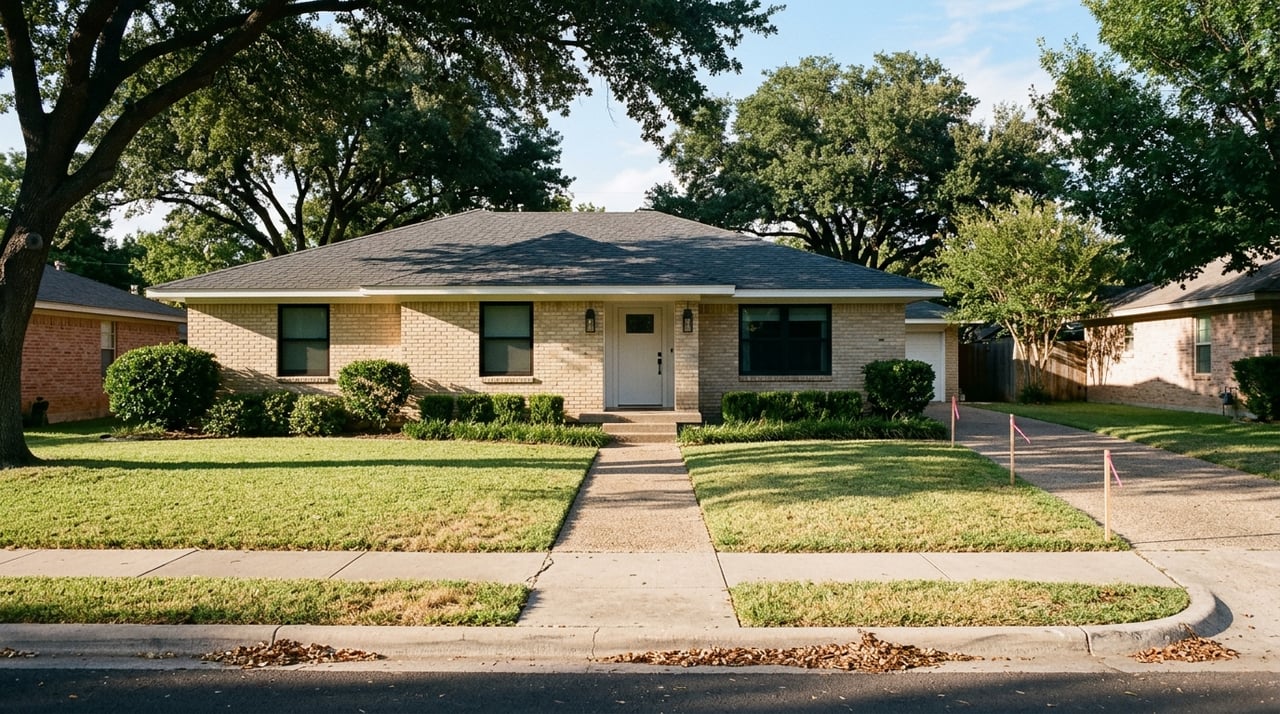
That distinction matters because an older home may not be the main driver of the purchase price. In many cases, buyers are paying for the parcel itself, especially when the property may be a tear-down or major redevelopment candidate.
For that reason, a home that feels dated or functionally obsolete can still command strong pricing if the lot checks the right boxes. In University Park, the site often shapes the opportunity just as much as the structure sitting on it.
How buyers evaluate a lot first
When buyers study a possible tear-down, they often start with one core question: what can this lot actually support? That means looking beyond curb appeal and asking whether the parcel can accommodate the home, driveway, pool, landscaping, and other improvements you may want.
University Park’s single-family zoning districts are tightly defined. Minimum lot area ranges from 35,000 square feet in SF-1 to 7,000 square feet in SF-4, while minimum widths range from 150 feet to 50 feet and minimum depths range from 150 feet to 120 feet.
The city also uses block-specific front setback rules in single-family districts. Front setbacks are measured from the back of the sidewalk or curb, and the average front yard depth on a blockface influences what can be built on a given lot.
If a lot is vacant or the existing house will be demolished, the city treats that property as having the average front yard depth of the block for setback calculations. That can have a real effect on your building envelope, so the lot is never just a simple width-by-depth calculation.
What drives lot value most
Not all lots are equal, even when the square footage looks similar on paper. In University Park, lot value is often influenced by frontage, depth, block context, corner location, alley access, tree conditions, and how efficiently the site can support a future build.
A wider lot may allow a more flexible house design. A deeper lot may create better separation between the house, outdoor living areas, and rear improvements.
Corner lots bring additional considerations. In some cases, corner lots that are 60 feet wide or less may qualify for special street-side setback treatment if certain curb and sidewalk conditions are met, while garages or carports facing a side street must be set back 20 feet from the street right-of-way.
Lot coverage also plays a major role. University Park limits impermeable surface in single-family districts based on lot size, which means a large vision for the property still has to fit within the city’s coverage rules.
For example, on lots from 7,501 to 10,000 square feet, the limit is 52% or 4,500 square feet. On lots of 35,001 square feet or more, the limit is 35% or 14,000 square feet.
Driveways in the required front yard do not count toward total lot coverage, but front-yard paving is limited to 50%. This is one reason two lots with similar dimensions can have very different practical value.
Trees and easements can change the equation
A lot that looks ideal at first glance may still have constraints that affect design and cost. Two of the biggest are tree preservation requirements and utility easements.
University Park’s tree-preservation rules are intended to preserve trees and increase property values. The city defines designated trees as those with a caliper of six inches or larger, and at least two designated trees must remain on the property at the end of construction unless an approved alternative is used.
That matters because the city defines buildable area broadly. It can include the house, driveway, parking area, pool, deck, patio, and other construction shown on the site plan.
Parkway trees are also the owner’s responsibility. So when you assess a lot, you are not just looking at what is beautiful today. You are also looking at what must stay, what can be worked around, and how that affects the final design.
Utility easements are another major factor. University Park states that no construction is permitted over utility easements, which can shrink the usable building envelope even when the legal lot dimensions look generous.
The zoning code also states that a principal building must face a street, not an alley. That can influence layout decisions for homes, garages, and site circulation.
Why irregular lots need extra review
In University Park, lot width and depth are measured by average horizontal distances between side lot lines and front or rear lot lines. That means an irregular parcel may not perform the way a quick online glance suggests.
A pie-shaped lot, angled lot, or otherwise unusual parcel may have less efficient buildable area than its square footage implies. This is where a current survey and site-plan review become especially important.
For buyers, this is often the difference between a lot that looks promising and one that truly works. It is also why early diligence can save both time and money.
How tear-down projects typically work
If you are buying with redevelopment in mind, the process usually starts with parcel and zoning verification. For new construction in University Park, the property must be a single platted lot before a building permit can be issued.
If the property consists of parts of one lot or pieces of multiple lots, those pieces must be platted into one lot of record. If the goal is to split an existing lot, a replat is required.
The city also notes that development requirements may include platting, variances or appeals, boards and commissions review, the zoning ordinance, and the zoning map. In short, a tear-down purchase is not just about buying land. It is about confirming that the lot can support your intended path forward.
As of January 1, 2025, the city’s permit process begins with a completeness meeting. At that meeting, the Building Permit Office confirms that the submittal package is complete, and design professionals are strongly encouraged to attend.
It is important to know that no approvals are granted at the completeness meeting. It is a first step, not a green light to begin work.
The 50% demolition rule explained
One of the most important rules for buyers considering a major remodel is University Park’s demolition threshold. If more than 50% of a structure is demolished, city policy requires a complete demolition and rebuild to current building and zoning codes.
The city uses a formula based on 50% exterior walls, 25% foundation, and 25% roof to make that determination. This is why a project that starts as a renovation idea can quickly become a full rebuild issue.
If you are trying to decide between remodeling and tearing down, this rule deserves early attention. It can affect your budget, design process, and timeline in a very meaningful way.
What has to happen before demolition
Demolition cannot typically begin right after closing. University Park has a specific checklist and job-site requirements that must be completed first.
Before work begins, the process includes:
- Applying for a demolition permit
- Passing a pre-demolition inspection
- Obtaining a rat-abatement letter covering at least seven consecutive days before demolition
- Installing a six-foot construction fence with erosion control
- Disconnecting utilities
- Completing a final inspection after the lot is cleared and graded
The city also limits work hours to 7 a.m. to 6 p.m. Monday through Saturday. Builders are asked to notify the eight immediate neighbors before work starts, and the construction fence must remain on-site during the job.
These details may seem administrative, but they shape your project schedule. They also reinforce why buyers should not assume a site can be cleared immediately after purchase.
Why early coordination saves time
University Park has several review bodies that can affect redevelopment timing. The Board of Adjustment hears variances and appeals of Community Development decisions, while the Planning and Zoning Commission hears rezoning requests, certain replat requests, and zoning amendments.
The city also has ZADAC, which reviews plan and design issues and comments on items like lighting, screening walls, signage, and overall appearance. Depending on your project, these review layers can influence both timing and expectations.
City staff can answer questions about permitted uses, setback requirements, and district-specific rules. For that reason, it is wise to involve your architect and real estate advisor early, before assuming a preferred home plan will fit a lot the way you expect.
Holding costs still matter
Even before construction begins, the numbers matter. DCAD separately tracks land value and improvement value, and those values form part of the tax base in University Park.
That means a premium lot can carry meaningful holding costs while you work through planning, permitting, and design. If you are buying for a future build, it helps to underwrite not just purchase price and construction cost, but also the carry during the pre-build phase.
A smart way to approach a University Park tear-down
If you are evaluating a tear-down or land-value purchase in University Park, it helps to think in layers. The existing house matters, but the bigger questions often relate to what the lot allows, what must stay, and how city rules will shape the finished result.
A strong evaluation usually includes:
- Confirming zoning and plat status
- Reviewing lot dimensions and setback impacts
- Checking lot coverage limits
- Understanding tree-preservation requirements
- Identifying utility easements
- Reviewing corner-lot or alley-related design issues
- Estimating holding costs while plans and permits move forward
When you approach the property this way, you can make decisions based on the real opportunity, not just the listing photos or the age of the house. That is especially important in a high-value market like University Park, where small site differences can create major pricing differences.
If you are weighing a lot purchase, a tear-down, or the sale of a property with redevelopment potential in University Park, working with a team that understands both pricing and due diligence can make the process much smoother. The JP Findley Group brings a data-driven approach, strong negotiation skill, and experience with complex property decisions across Dallas’s high-value neighborhoods.
FAQs
What does lot value mean for a University Park home?
- In University Park, lot value generally refers to the land component of the property, separate from the house or other improvements.
What happens if a University Park remodel exceeds the demolition limit?
- If more than 50% of the structure is demolished, city policy requires a complete demolition and rebuild to current building and zoning codes.
What should you check before buying a tear-down in University Park?
- You should review zoning, plat status, setbacks, lot coverage, trees, easements, and whether the lot can realistically support your planned home and site improvements.
Can you split a lot later in University Park?
- Not automatically. If you want to split an existing lot, the city requires a replat process.
Can demolition start immediately after closing on a University Park property?
- No. The city requires permit review, inspection steps, utility disconnection, fencing, and other pre-demolition requirements before work can begin.
Why do trees matter on a University Park rebuild lot?
- Tree-preservation rules can limit design flexibility because designated trees may need to remain on the property at the end of construction unless an approved alternative is used.